
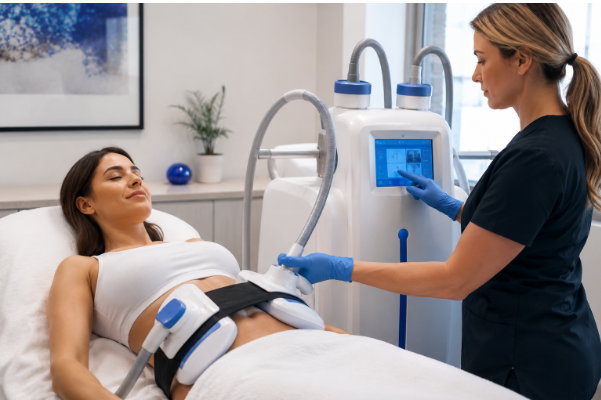
Stubborn fat remains a common concern. In the UAE, where appearance often carries social and professional importance, more residents are choosing non-surgical treatments to target fat deposits that resist diet and exercise. The numbers back this shift. The UAE non-invasive aesthetic treatment market generated USD 355.7 million in revenue in 2023 and is forecast to climb to USD 786.8 million by 2030, expanding at a 12 percent compound annual rate . Globally, cryolipolysis (the science behind CoolSculpting) commanded a 33.5 percent share of the non-surgical fat reduction category in 2025, with more than six million treatments performed worldwide to date. In Dubai and Abu Dhabi, that demand has made CoolSculpting body contouring one of the most requested resistant fat reduction options on offer.
The reason is simple. Patients want a flatter stomach, a smoother flank, or a defined jawline without surgery, scars, or a recovery window that pulls them out of work and life. CoolSculpting answers that demand with a clinically validated approach that targets fat cells directly, leaves surrounding tissue untouched, and lets patients walk out of the clinic and back into their day.
What Makes CoolSculpting Different
CoolSculpting is the brand name for cryolipolysis, a fat freezing treatment cleared by the US FDA in 2010. The science behind it is straightforward but elegant: fat cells are more sensitive to cold than skin, muscle, nerves, or blood vessels. When fat is exposed to precisely controlled cooling, the targeted cells crystallize and die, while every other tissue layer remains unharmed.
Once those fat cells are damaged, the body recognizes them as waste and clears them through the lymphatic system over the following weeks. They do not come back. Unlike weight loss, which shrinks fat cells, CoolSculpting reduces the actual number of fat cells in the treated area, which is what makes the result durable.
The CoolSculpting Elite system, the current generation of the device, uses C-shaped applicators designed to grip the body’s natural curves. That redesign matters because it means the device draws in more tissue per cycle, which translates to better coverage and stronger results per session. FDA clearance now covers nine zones: abdomen, flanks, thighs, bra fat, back fat, banana roll beneath the buttocks, upper arms, submental (double chin), and submandibular regions.
How the Treatment Targets Stubborn Fat
Walk into a CoolSculpting session and the workflow is roughly the same regardless of the area being treated. A practitioner identifies the pocket of fat, positions the applicator over it, and activates the suction. The treated tissue is pulled into the applicator cup, and controlled cooling brings the temperature down to a level that triggers apoptosis in the fat cells.
Several things happen in sequence during and after the session:
- Cooling crystallizes the lipids inside fat cells, triggering a natural cell death process.
- Surrounding skin, nerves, and muscle stay protected because they tolerate the cold without damage.
- Over the next four to twelve weeks, the lymphatic system gradually clears the destroyed cells.
- The treated area becomes measurably smaller as that volume disappears.
Clinical research has consistently shown fat reductions of around 20 to 25 percent per treated zone after a single session, with most patients reporting visible change within a few weeks and final results settling in by the three-month mark.
What a Session Actually Looks Like
A standard CoolSculpting Elite session runs about 35 to 45 minutes per applicator, and many clinics in the UAE pair two devices to treat symmetrical areas at once. After mapping the treatment zone with a template, the practitioner applies a gel pad and positions the applicator. The first few minutes feel intensely cold, with some tugging and pressure as the tissue is drawn in. Within about ten minutes the area goes numb, and most patients spend the rest of the session reading, scrolling, or working on a laptop.
There are no needles. No anesthesia. No sedation. When the cycle ends, the practitioner massages the treated area for two to three minutes to break up the crystallized fat and improve clearance. Patients sometimes describe this part as the most uncomfortable, but it ends quickly. Mild redness, swelling, or temporary numbness can linger for a few days. Bruising is occasional. None of it interferes with normal activity.
Most people return to work the same afternoon. There is no recovery protocol, no compression garments required, no exercise restriction.
Who Sees the Best Results
CoolSculpting body contouring is not a weight loss solution. It works best for people who are close to their goal weight but carry localized pockets of fat that will not budge despite consistent training and clean eating. The ideal candidate profile typically includes:
- Adults within roughly 30 percent of their target body weight
- People with discrete, pinchable areas of subcutaneous fat
- Patients seeking definition and shape rather than significant volume loss
- Anyone who cannot accommodate the downtime of liposuction
- Post-pregnancy patients targeting abdominal or flank fat
- Men addressing love handles, lower abdomen, or chest fullness
Contraindications include cryoglobulinemia, cold agglutinin disease, paroxysmal cold hemoglobinuria, pregnancy, and certain hernias in the treatment area. A consultation screen for these.
Treatment Areas and Realistic Outcomes
The most popular zones for CoolSculpting body contouring in the UAE are the lower abdomen, upper abdomen, flanks, inner and outer thighs, bra fat, back rolls, upper arms, and the area under the chin. Each zone responds slightly differently, but the underlying principle holds across all of them: only the fat reacts, while the skin and surrounding tissue stay intact.
What patients can realistically expect is a noticeable reduction in the contour of the treated area, typically in the range of 20 to 25 percent fat layer reduction per session. Most areas benefit from a second session four to twelve weeks later for compounded improvement. The change is gradual rather than dramatic, which is part of what makes results look natural rather than artificial.
CoolSculpting will not tighten loose skin, treat visceral fat, or replicate the volume loss of surgical liposuction. Honest clinics make that distinction during consultation. For patients with significant skin laxity alongside fat, a combined approach using cryolipolysis with a separate skin tightening modality often delivers the strongest outcome.
How CoolSculpting Compares to Other Non-Surgical Body Sculpting Options
The non-surgical body sculpting category includes several competing technologies. Radiofrequency-based devices heat fat cells rather than cool them and often deliver mild skin tightening as a side benefit. Laser lipolysis (SculpSure) uses heat through a flat applicator and runs shorter sessions, around 25 minutes. High-intensity focused electromagnetic devices (EMSCULPT NEO) build muscle while reducing fat, which is useful for definition rather than bulk fat removal. Ultrasound-based platforms target deeper fat layers.
CoolSculpting holds its position as the most studied and most widely performed of these technologies because the underlying mechanism is reliable, the safety profile is strong, and the results are predictable for the right candidate. Many patients in the UAE choose CoolSculpting as the foundation of a body contouring plan, with other modalities added if skin laxity, muscle tone, or surface texture also need attention.
Why the Clinical Setting Matters
The device matters less than the hands holding it. Applicator selection, placement, and overlap during multi-cycle sessions all influence the final result. A poorly mapped treatment can leave uneven contours or under-treat the target area. Practitioner experience also matters when screening for the rare but real risk of paradoxical adipose hyperplasia, a condition in which treated tissue grows rather than shrinks. The risk is uncommon, but a trained eye on candidacy and aftercare reduces it further.
At Aesthetic Polyclinic, patients receive CoolSculpting body contouring treatments planned around their specific concerns, body composition, and goals. Each protocol begins with a one-on-one consultation, with treatment areas mapped to deliver smooth, even results over the full course of the plan. For anyone weighing whether fat freezing treatment is the right fit for resistant fat reduction, an in-person consultation remains the most reliable next step.
Frequently Asked Questions
- How many CoolSculpting sessions will I need to see results?
Many patients are satisfied after one session per area, with visible change appearing within three to four weeks. Larger zones or pockets that need more dramatic reduction often benefit from a second session about eight to twelve weeks later.
- Is CoolSculpting painful?
The first few minutes feel intensely cold, sometimes with mild pinching as the tissue is drawn into the applicator. After ten minutes the area goes numb and the rest of the session is comfortable. The post-treatment massage is brief and tolerable.
- How long do CoolSculpting results last?
The treated fat cells are eliminated permanently. Results last indefinitely as long as the patient maintains a stable weight. Significant weight gain can enlarge any remaining fat cells in surrounding areas.
- Is non-surgical body sculpting safe for all body types?
CoolSculpting is suitable for most healthy adults with pinchable subcutaneous fat. A consultation screens for the small number of medical conditions that contraindicate cold-based treatments and confirms whether the area in question is a good fit for cryolipolysis.